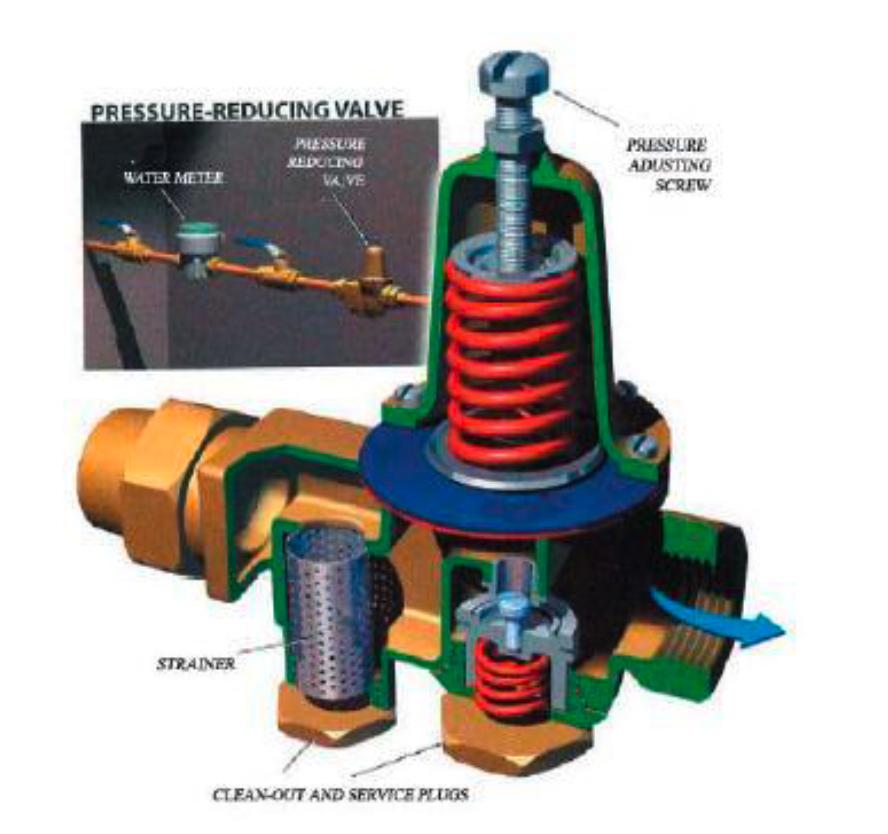
What does a water pressure regulator do?
Household water pressure regulators reduce the water pressure from the utility’s distribution system to a lower pressure for household plumbing and fixtures.
How does a pressure regulator work?
A pressure regulator is a spring-loaded valve that regulates pressure on the downstream (house) side of the valve. Adjusting the screw on top of the valve increases or decreases the pressure on the spring and increases or decreases the pressure downstream of the valve.
Who is responsible for installing and maintaining the pressure regulator?
The water utility customer is responsible for repairing and maintaining the private plumbing system located downstream of the utility’s water meter. The property owner is responsible for installing and maintaining the pressure regulator.
Where should the pressure regulator be installed?
On new installations, the pressure regulator is usually installed downstream, (on the house side) of the water meter, near the house.
Do pressure regulator’s wear out and fail?
Yes, pressure regulators are machines with moving parts that are subject wear, fatigue, and seizure. Over many years and millions of modulations the valve wears out and fails resulting in undesirable low or high pressure.
How do I know if the pressure regulator is working?
There are a few ways to ensure proper regulator operation. One option is installing a pressure gauge on both sides of the regulator to confirm the downstream reading is lower than the upstream reading. If you are not able to use a pressure gauge, then symptoms of a malfunctioning regulator valve might include “clanging” or “rattling” pipes when plumbing fixtures are in use.
Can I adjust and repair my pressure regulator?
Yes. A homeowner or plumber can accomplish this by consulting the pressure regulator manufacturer’s instructions. The adjustment mechanism is usually a screw on top of the regulator. Turning this screw changes the amount of spring compression. Generally, turning the screw clockwise increases house water pressure and turning the screw counter-clockwise reduces house pressure. Repair kits for rebuilding pressure regulators are usually available from the manufacturer. The assistance of a licensed plumber for pressure regulator installation and maintenance is recommended.
To what pressure should I adjust my pressure regulator?
Most homeowners set their pressure at approximately 50 pounds per square inch (psi), but it is a matter of owner preference. Lower settings will help conserve water and extend the life of plumbing fixtures.
Are pressure regulators required?
Yes, Section 608.2 Excessive Water Pressure of the Uniform Plumbing Code requires pressure regulators with a strainer whenever the static water pressure from the supply piping exceeds 80 psi. They are especially valuable in controlling surges that may occur in the public supply.
What is the static water pressure at my property?
The static water pressure is the amount of water pressure available to your service address from the utility’s distribution system when there is no water flowing out of customer fixtures. Please note that flow results in head loss that reduces pressure. A rough estimate of your static water pressure can be provided by calling the Customer Care department (626-543-2640).
What is the acceptable range of water pressure that the water utility is allowed to provide to customers?
Suburban Water Systems is regulated by the California Public Utilities Commission (CPUC). CPUC General Order 103-A and Suburban’s Rule 2.B.1 prescribe an acceptable pressure range of 40-125psi.
Disclaimer: Suggestions of potential problems or solutions regarding customer plumbing provided by Suburban Water Systems and its agents are provided as a courtesy. Suburban is not responsible or liable for costs and service interruptions resulting from customers investigating, repairing, or replacing plumbing located downstream of the water meter.